
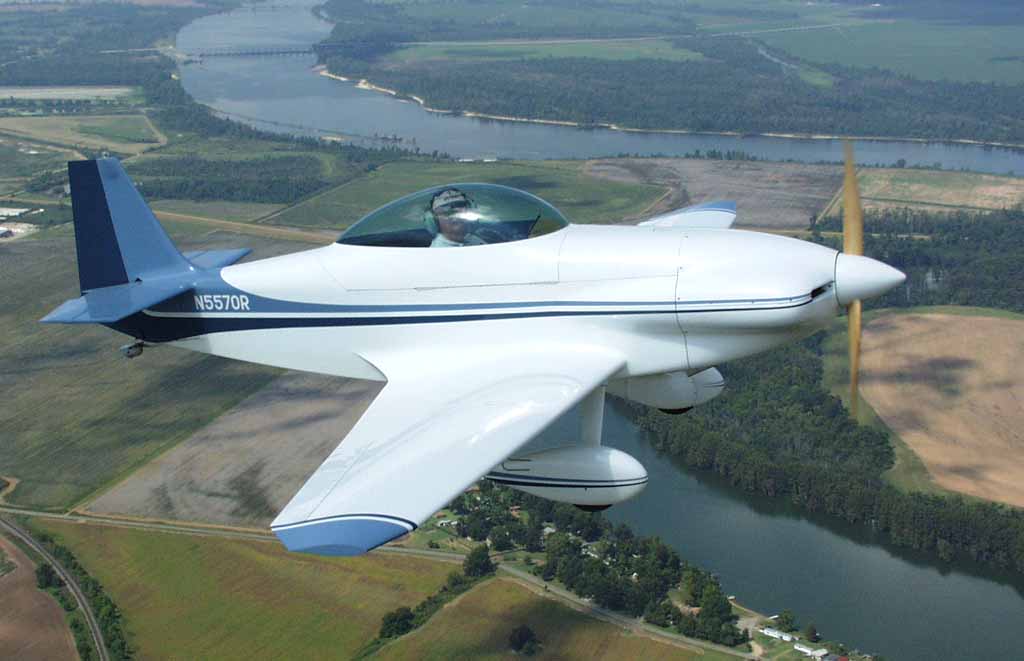

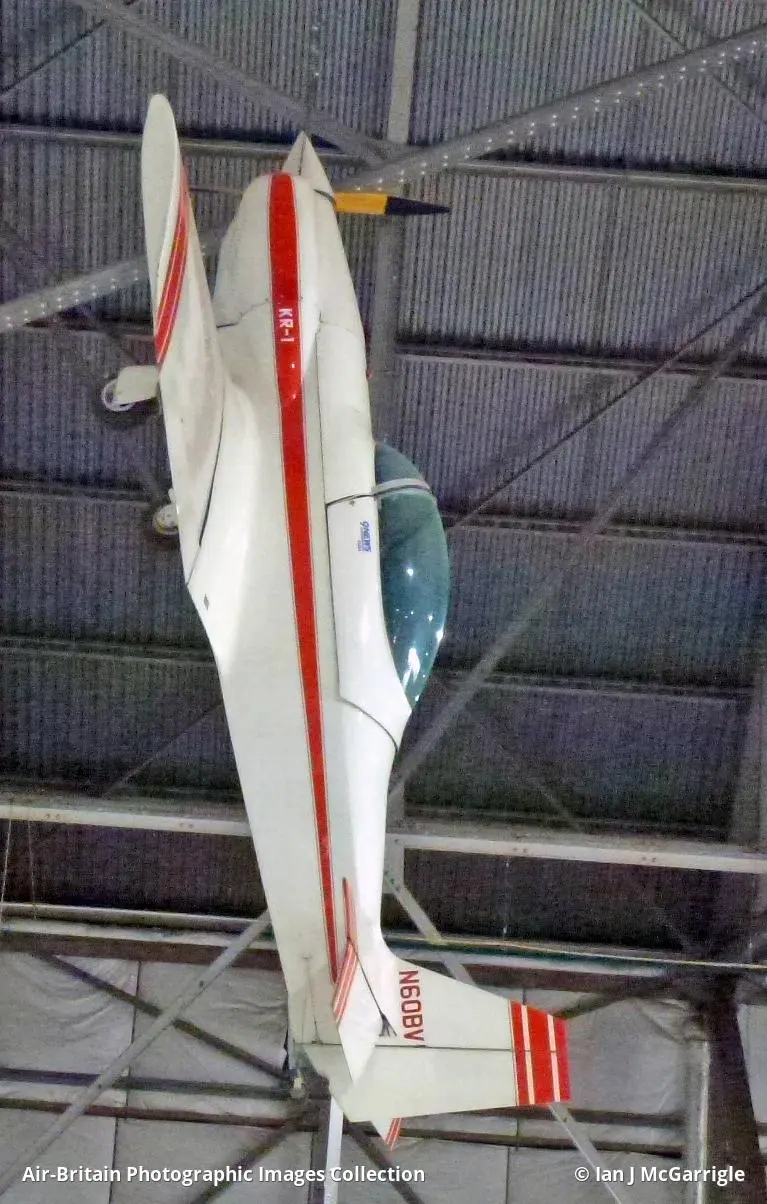
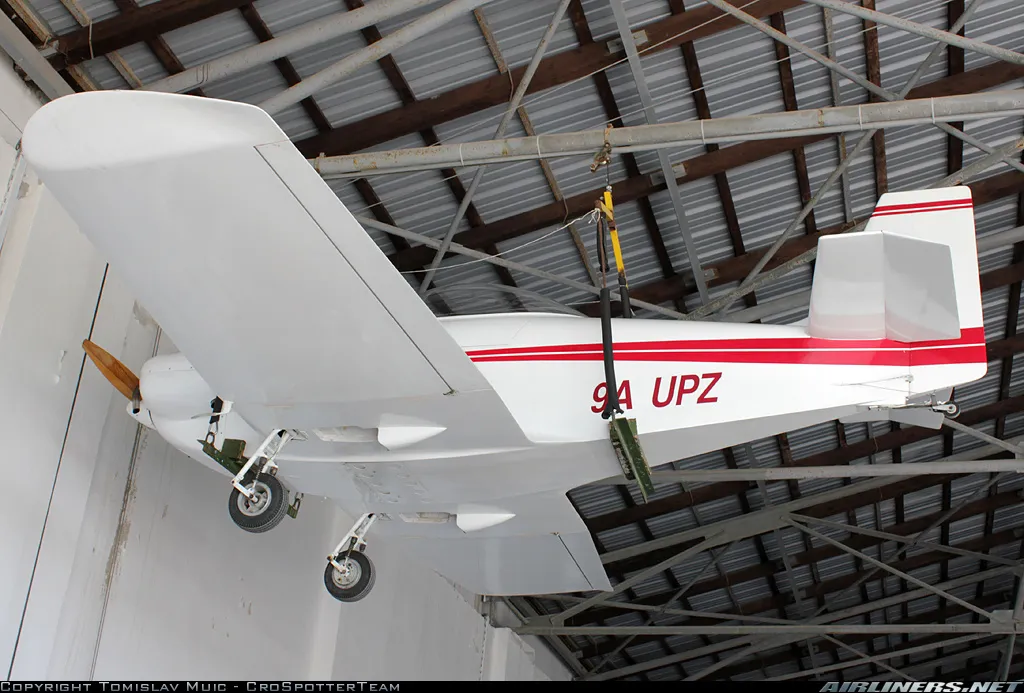
Rand Robinson KR-1: The “Man-Carrying Model Plane”
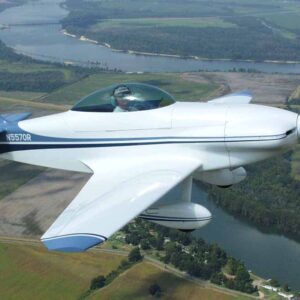
The KR-1 is not just an airplane; it is the sports car of the homebuilt world. Designed by Ken Rand in the early 1970s, it famously combined the tiny dimensions of a radio-controlled model with the performance of a high-speed racer. It didn’t just break the rules of aviation—it invented a whole new way to build. If the Sky Pup is about simplicity and the Volksplane is about ruggedness, the KR-1 is about pure, pocket-sized adrenaline.
Why Is It a Legend?
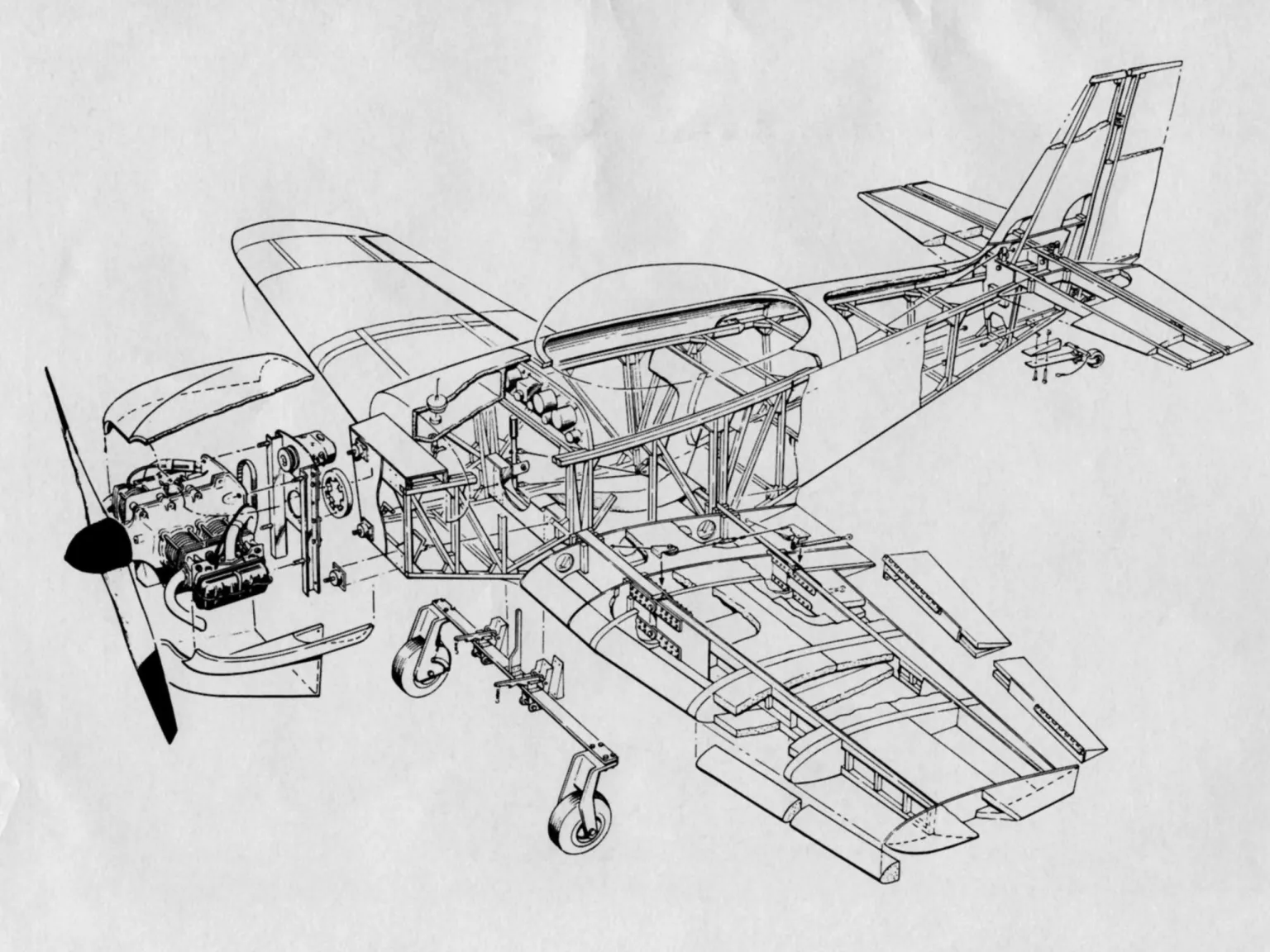
The Composite Revolution: Long before carbon fiber became mainstream, Ken Rand pioneered the “foam-and-fiberglass” method. The KR-1 uses a basic wooden box for the fuselage, which is then “sculpted” with blocks of styrofoam and skinned with Dynel fabric and epoxy.[1] This allowed builders to create sleek, compound curves in their garage without expensive molds, changing homebuilding forever.
Volkswagen Efficiency: Like the Volksplane, the KR-1 is built around the reliable Volkswagen Beetle engine. However, because the KR-1 is so tiny and aerodynamically clean, it turns that modest VW power into blistering speed. It is one of the most fuel-efficient ways to go fast, often achieving over 30 miles per gallon at speeds that leave larger Cessnas in the dust.
The Retractable Micro-Fighter: In its original configuration, the KR-1 featured manually retractable landing gear—a rarity for such a small and affordable aircraft. This “tuck-up” design reduced drag significantly, giving the pilot the sensation of flying a miniature WWII fighter.
Trailerable Freedom: Because it is so small (with a wingspan of only 17 feet) and the wings are easily removable, the KR-1 was designed to be kept in a standard garage and towed to the airport on a trailer. It eliminated the need for expensive hangar fees, making high-performance flight truly accessible to the common person.
Performance and Key Numbers
The KR-1 is built for the pilot who wants “maximum bang for the buck.” It is exceptionally fast for its weight and power, requiring a focused hand at the controls.
General Specifications:
-
Crew: 1 pilot
-
Wingspan: 17 ft (5.18 m)[2]
-
Wing Area: 62 sq ft (5.76 m²)[2]
-
Empty Weight: 310 – 375 lbs (140 – 170 kg)
-
Max Takeoff Weight: 750 lbs (340 kg)
-
Useful Load: Approx. 375 lbs (170 kg)
-
Typical Engine: 1200cc to 2100cc Volkswagen (36 – 80 hp)[2]
Performance:
-
Top Speed: 200 mph (322 km/h) — with larger VW engines
-
Cruise Speed: 130 – 180 mph (210 – 290 km/h)
-
Stall Speed: 45 – 52 mph (72 – 84 km/h)
-
Rate of Climb: 800 – 1,200 ft/min (4 – 6 m/s)
-
Takeoff Distance: 350 ft (107 m)
-
Range: Up to 1,400 miles (2,250 km) with auxiliary tanks
-
Fuel Consumption: 3 – 3.8 gallons per hour (11 – 14 L/h)
In short, the Rand Robinson KR-1 is the ultimate “garage-built” rocket. It proved that you don’t need a massive engine or a factory-sized budget to fly at nearly 200 mph. It remains a favorite for builders who love to sand, sculpt, and go fast—a true testament to the idea that the best things really do come in small, VW-powered packages.

Reviews
There are no reviews yet.