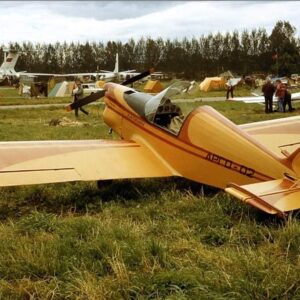

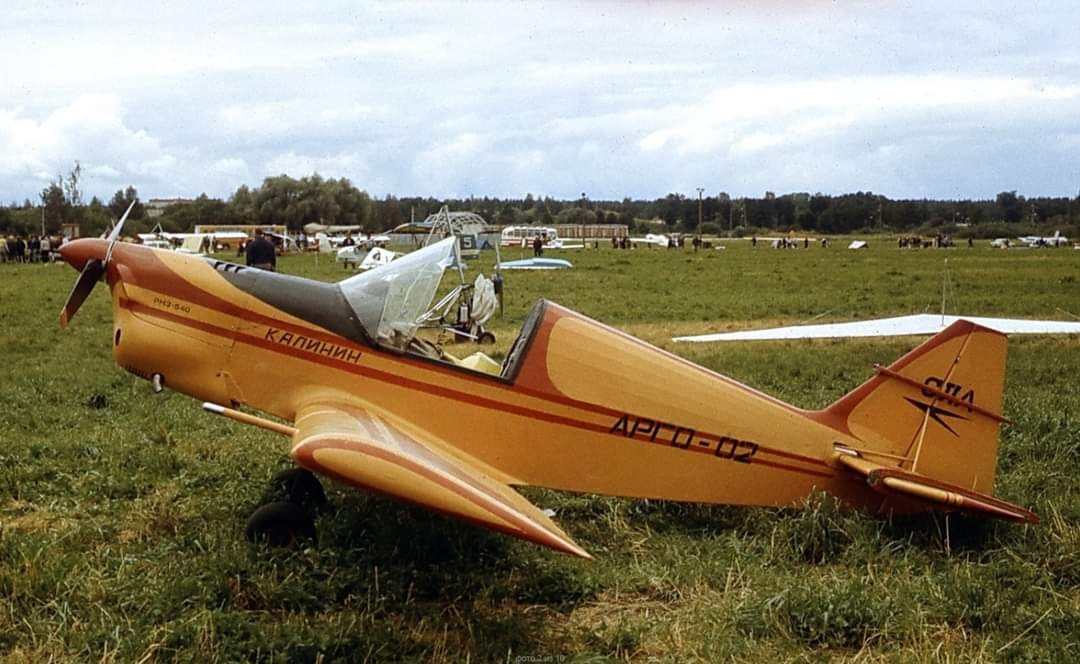
The Argo-02 is a legend of Soviet and Russian amateur aviation. Designed in the 1980s by the Tver technical design group (led by E. Ignatiev), this aircraft was born with a very clear philosophy: to be the “People’s Plane.” It is not a toy; it is a low-wing, all-wood monoplane that looks like a miniature World War II fighter, but built with a “use it if you have it at hand” philosophy.
Here are its advantages, with a massive emphasis on its radically economic construction and alternative technical solutions.
1. “Alternative” Construction and War Economy
The Argo-02 is the undisputed king of construction using non-aviation materials. It was designed during a time of scarcity, so its engineering is based on avoiding the aviation supply shop and visiting the local neighborhood hardware store instead.
-
Common Pine Wood (Non-Aviation): Forget expensive certified Sitka spruce. The Argo-02 is calculated to be built with standard pine slats, the kind you find at any sawmill or DIY store for making door frames. Its design slightly oversizes the parts to allow for the use of commercial-grade wood (with small knots allowed) without sacrificing safety.
-
Furniture Plywood: While other planes demand certified Finnish birch plywood, the Argo allows the use of construction or furniture plywood (3mm and 5mm). If you can build a wardrobe, you have the materials for the fuselage.
-
Common Industrial Steel: The fittings do not require 4130 chrome-moly steel (expensive and hard to find). The design accepts common carbon steel (like Russian ST-3 or ST-20, or standard 1020 steel), which is cheap, easy to weld, and can be found in any scrapyard.
-
No Complex Composites: There is no carbon fiber or oven-cured epoxy resins here. It is wood, wood glue (or basic epoxy), and fabric.
2. Flight and Design Advantages
Despite being made of “broomsticks,” it flies incredibly well. It is an aircraft with much cleaner aerodynamics than the Sky Pup or the Aeronca.
-
Fighter Aesthetic: It is a cantilever low wing (no struts). It looks fast and aggressive, like a Yak-3 or a Spitfire in miniature. It doesn’t look like a tube-and-fabric ultralight; it looks like a “real” airplane.
-
Sporty Agility: Being a compact low-wing design, it has a much more direct and fun control response. You don’t just float; you pilot.
-
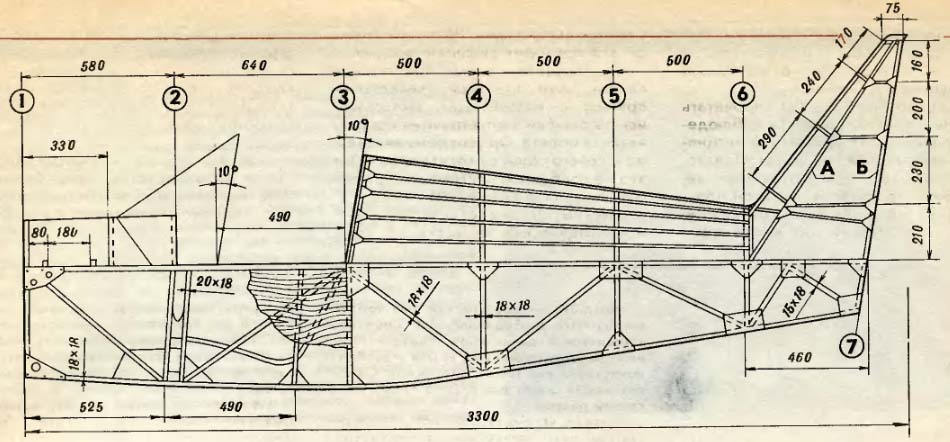
Structural Strength: The fuselage is a semi-monocoque wooden box. It is incredibly rigid and resistant to torsion, allowing it to withstand quite respectable G-loads (+4/-2 G) for a homebuilt aircraft.
3. The Alternative Heart: Snowmobile Engines
The Argo-02 embraces the alternative even in its propulsion. You don’t need a Continental or Lycoming engine.
-
The Buran/Rotax Solution: It was originally designed to carry the Russian “Buran” snowmobile engine (a rugged Rotax clone). This means the plane flies happily with 2-stroke engines between 28 and 50 HP.
-
Total Adaptability: Because of its simple wooden nose, builders have adapted everything from air-cooled Volkswagen engines to modified Kohler or Briggs & Stratton industrial engines. If it spins and weighs less than 40 kg, the Argo accepts it.
4. Performance by the Numbers (Russian Efficiency)
Thanks to its clean wing and tiny size, it extracts a lot of performance from very little power.
-
Cruise Speed: With a modest engine, it cruises at about 110-120 km/h (68-75 mph). It is almost twice as fast as a Sky Pup with the same power, thanks to its lower drag.
-
Short Takeoff (STOL): Although it is not a helicopter like the Aeronca, its empty weight is ridiculous (about 145 kg / 320 lbs). It takes off in 80 to 100 meters of grass effortlessly.
-
Consumption: With a snowmobile engine or a Rotax 447, you spend about 8-10 liters (2-2.5 gallons) per hour flying at 120 km/h. It is cheaper than driving a car.
Considerations (The Soviet Reality)
To be fair, you must also consider that:
-
Tight Cockpit: It is a small plane. If you are over 1.85m (6’1″) or very heavy-set, you will need a shoehorn to get into the cockpit. It is a flying glove.
-
Construction Demands: Although the materials are cheap, it requires a lot of carpentry work. You have to cut, sand, and glue hundreds of pieces of wood.
-
Landing Gear: The original design uses a simple rubber disc shock absorption system or a leaf spring. It is rugged and functional, but it is not the smoothest suspension in the world on very bumpy strips.
In summary, the Argo-02 is the ultimate proof that you don’t need NASA materials to fly. It is the perfect option if you want a fast, beautiful, and sporty plane for the same cost as building a garden shed.


Reviews
There are no reviews yet.