
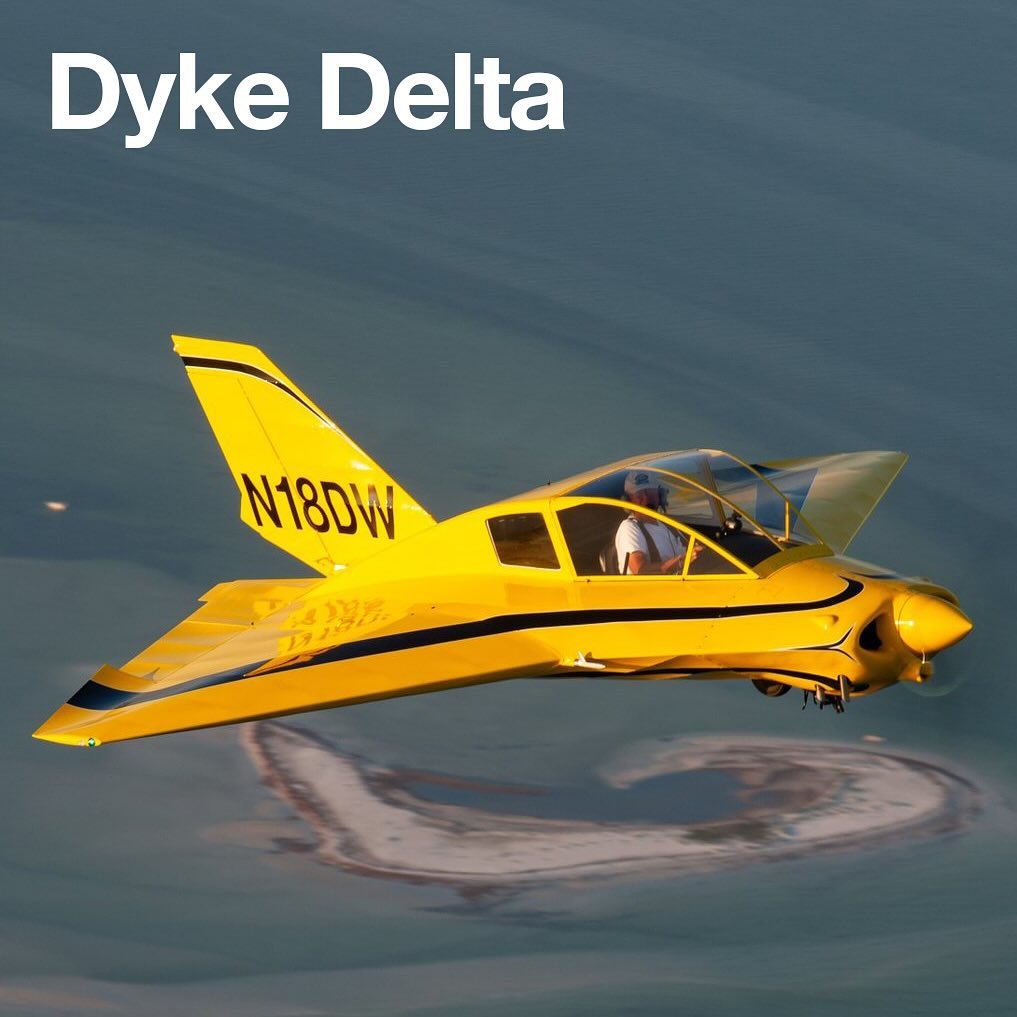
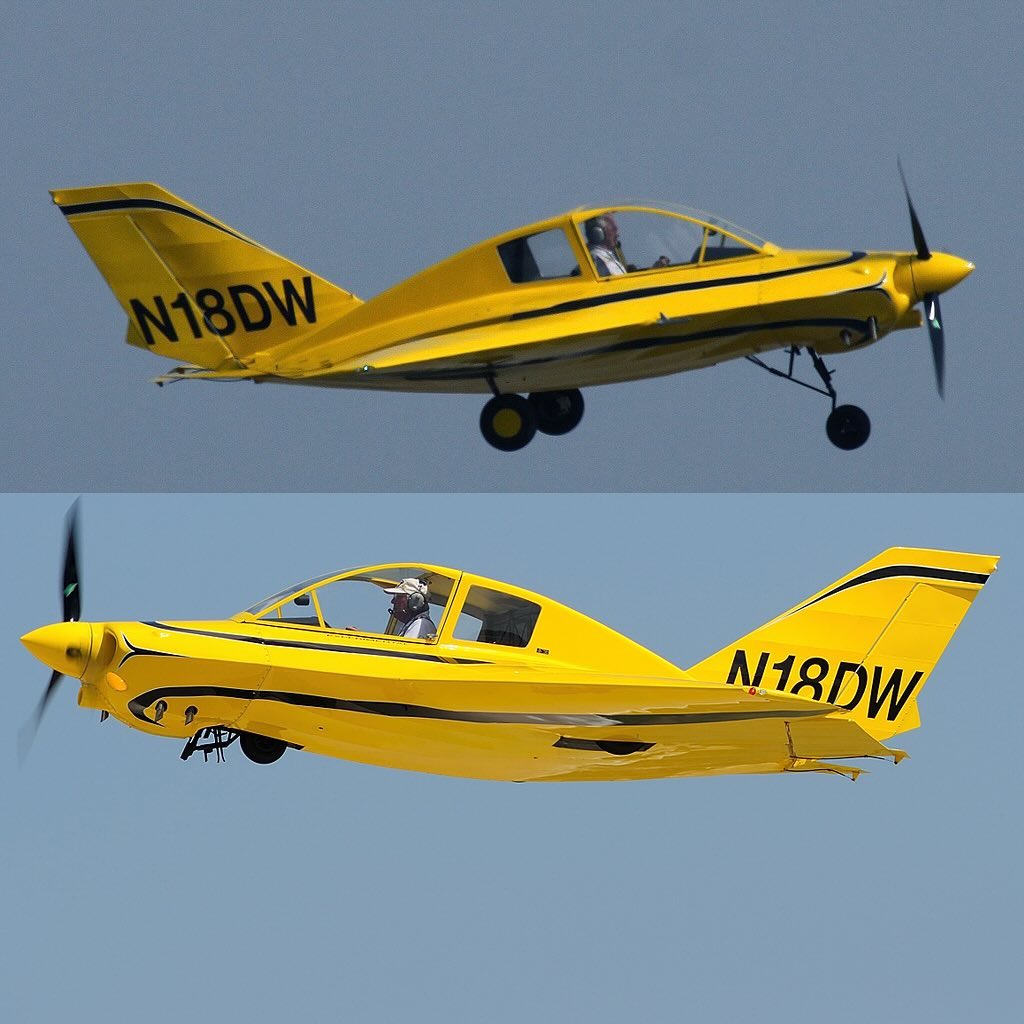
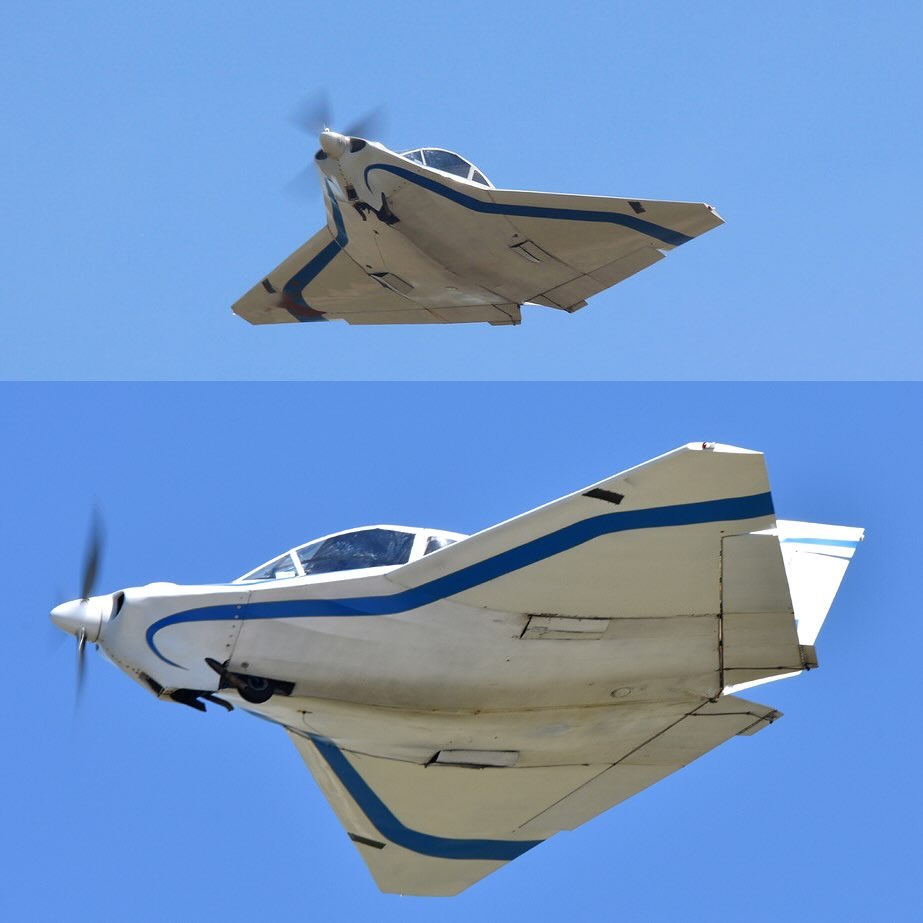
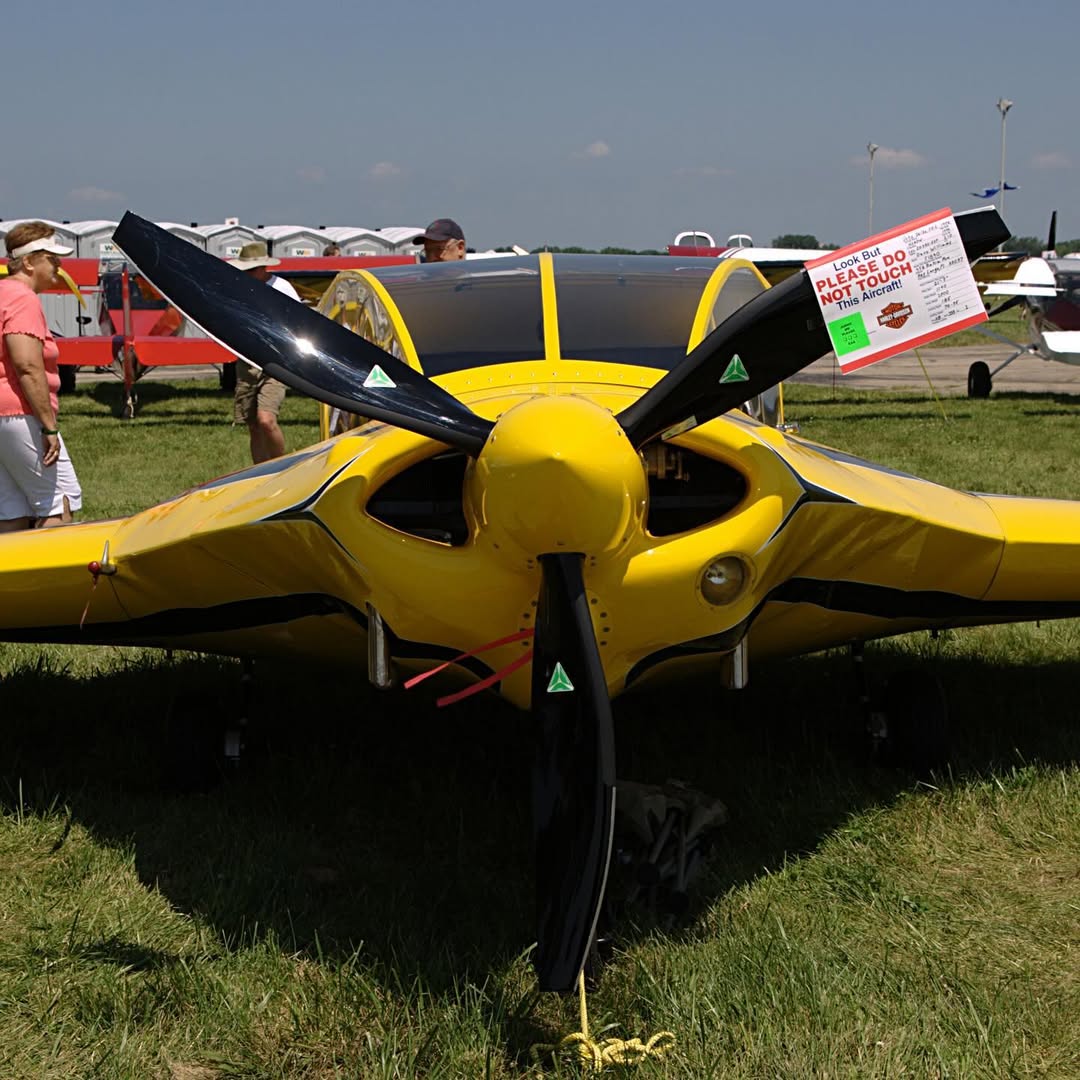
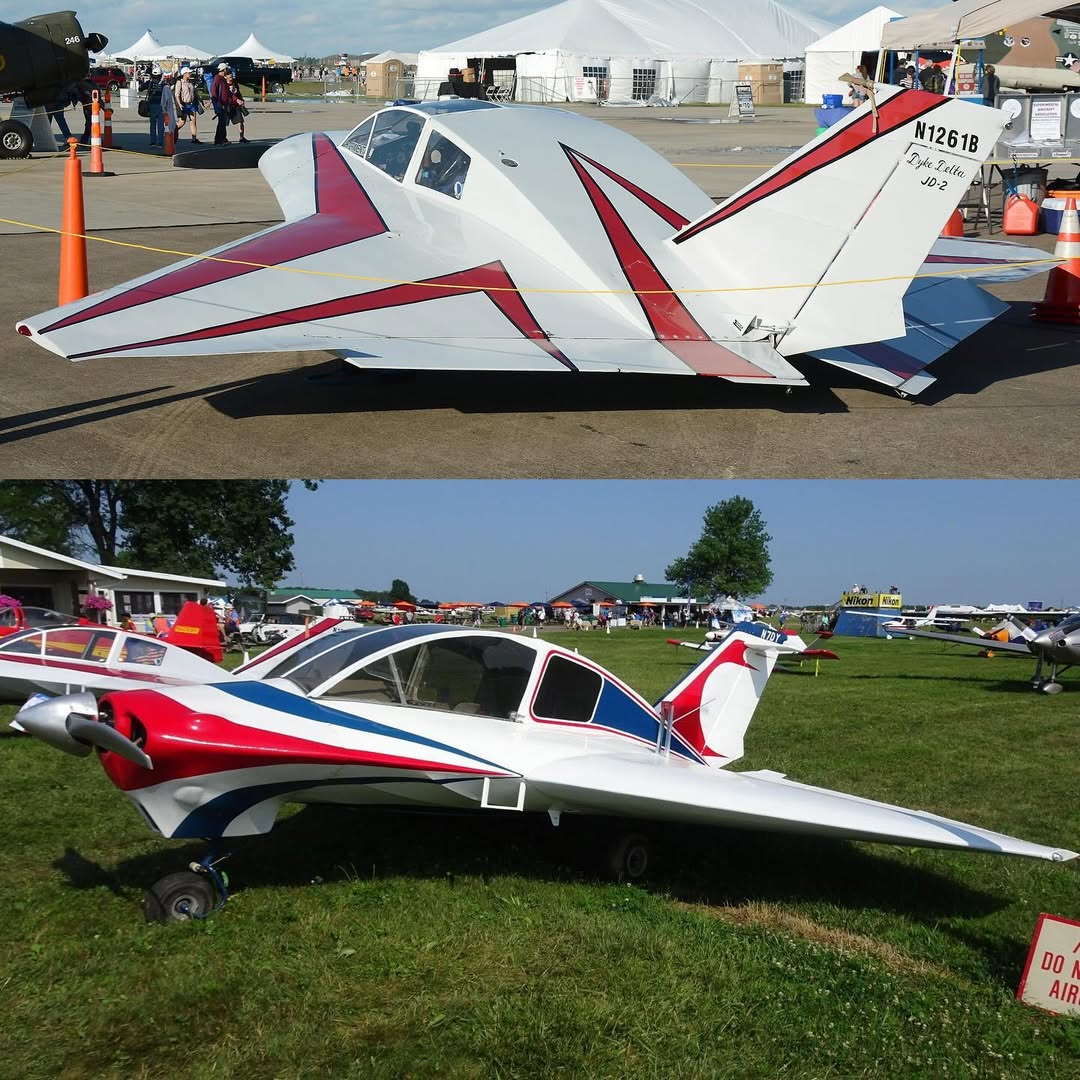
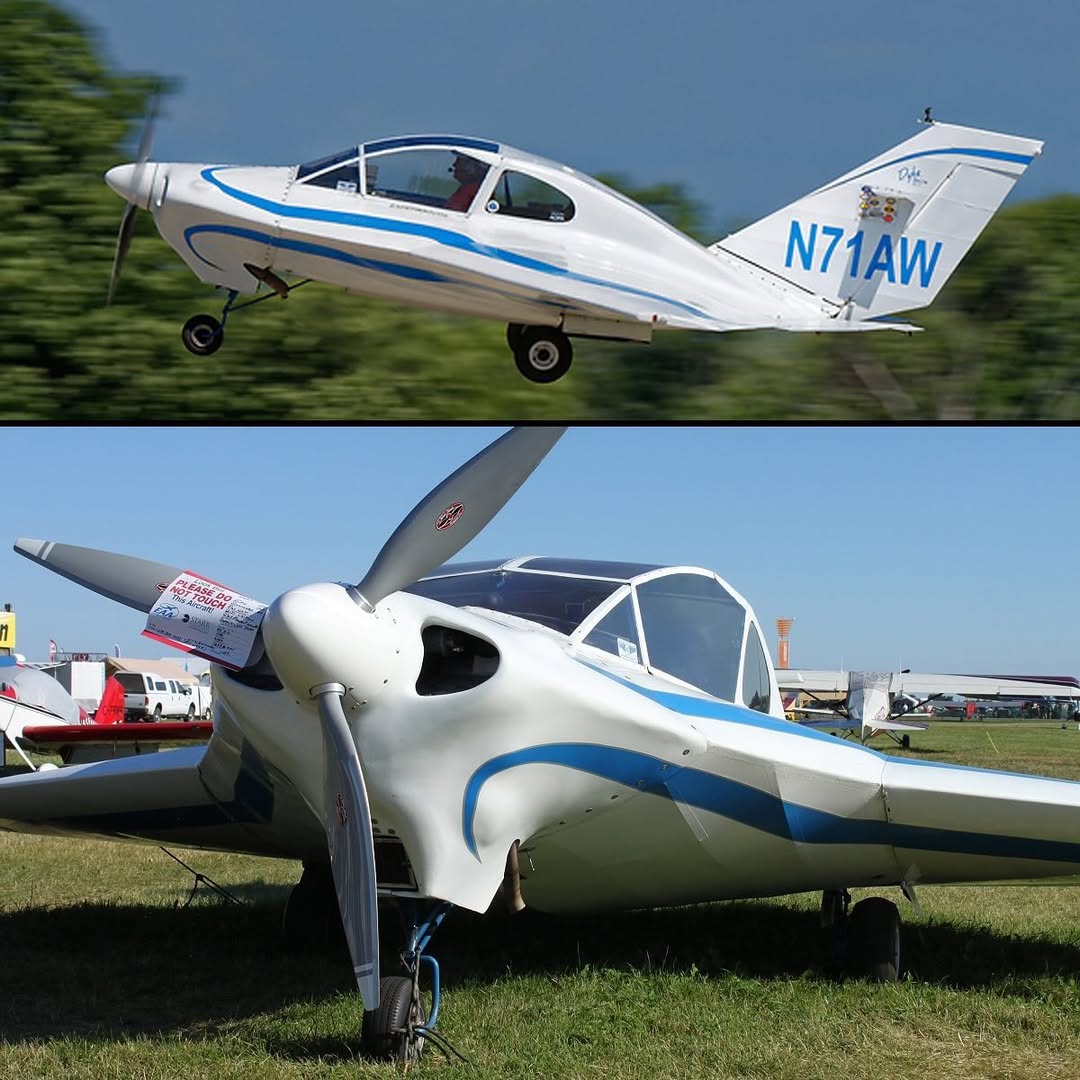
Designed by John Dyke in the 1960s, this aircraft broke the mold. It is not a tube with wings; it is a double delta lifting body. Its philosophy is simple: Transport a small family at high speed, with rock-solid stability, and store it in the garage at home.
Here are its advantages, focused on its unique aerodynamics, its road-towability, and its cruise performance.
1. The “Double Delta” Design: A UFO on the Runway
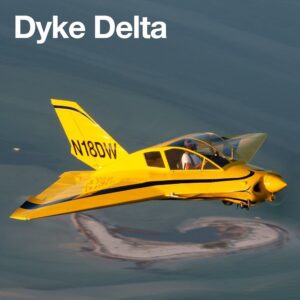
The Dyke Delta looks like nothing else. Its futuristic shape has very practical functions.
-
Lifting Body: It does not have a “dead” fuselage that only generates weight and drag. The fuselage is part of the wing. The entire aircraft generates lift. This allows it to be compact yet carry a lot of weight.
-
Delta Wing: The delta configuration is famous for being impossible to stall in the conventional sense. At high angles of attack, the plane does not “break” or drop suddenly; it simply settles into a controlled descent (a “mush”). It is incredibly stable in turbulence; it cuts through the air like a hot knife through butter.
-
Visibility: Although it looks enclosed, visibility in cruise is excellent thanks to its wrap-around windows.
2. The Killer Feature: Roadable and Towable
This is John Dyke’s logistical genius. He knew hangars were expensive, so he designed the plane to live at home.
-
Folding Wings: The outer sections of the wings fold up and over the fuselage.
-
Towing on its Own Gear: Unlike other planes that need a special trailer, the Dyke Delta is its own trailer. You hitch it to the tow ball of your car (it is towed backwards) and it rolls on its own robust main landing gear.
-
No Hangar: You can build it in your garage, tow it to the airport, fly, and bring it back for dinner. Total savings.
3. Construction: Steel and Fiberglass (No Molds)
Despite its compound curves that look like they require expensive factory molds, it is a “do it yourself” project.
-
4130 Steel Structure: The skeleton is a complex and strong structure of welded steel tubing. It is a literal safety cage.
-
Fiberglass and Fabric Skin: You don’t need giant female molds. The fiberglass is laid over the structure or simple forms. It is labor-intensive, but accessible to the amateur builder.
-
Retractable Gear: It features manual or electric retractable landing gear, which cleans up the aerodynamics to achieve high speeds.
4. Statistics and Numbers: A Speed Cruiser
The Dyke Delta is a serious cross-country aircraft. It is not for flying laps around the patch; it is for visiting grandma in another state.
Dimensions and Weights:
-
Wingspan: 6.7 meters (22 feet). Very compact.
-
Capacity: Designed as a 4-seater (although realistically today, it is a comfortable “2+2” for two adults and two kids, or 3 adults).
-
Empty Weight: 480-500 kg (1,050-1,100 lbs).
-
Maximum Takeoff Weight (MTOW): 885 kg (1,950 lbs). It carries almost its own weight!
Performance (with 180 HP Lycoming O-360):
-
Cruise Speed: It is fast. It maintains 275-290 km/h (170-180 mph). It leaves most Cessnas and Pipers with the same power in the dust.
-
Maximum Speed: Exceeds 320 km/h (200 mph).
-
Landing Speed: Here is the trick. It comes in fast and with the nose high, touching down at about 110-120 km/h (70 mph).
-
Range: About 1,100 km (700 miles).
5. Considerations (Not for beginners)
The Dyke Delta is a demanding machine in both construction and piloting:
-
High Alpha Landing: Being a delta wing, to land you have to raise the nose significantly (high angle of attack). This blocks forward visibility at the critical moment. You have to learn to land by looking out the sides or using peripheral references. It is not easy for a novice.
-
Build Complexity: Welding the fuselage and achieving smooth contours requires skill and many hours (estimated around 2,000 hours).
-
Stability vs Maneuverability: It is very stable (it wants to go straight), which is great for traveling, but it is not an agile aerobatic plane.
In summary, the Dyke Delta JD-2 is for the builder who wants a high-speed family cruiser that they can store in their garage. It is an aerodynamic masterpiece that offers light commercial aircraft performance for the price of materials and your labor.
Reviews
There are no reviews yet.