

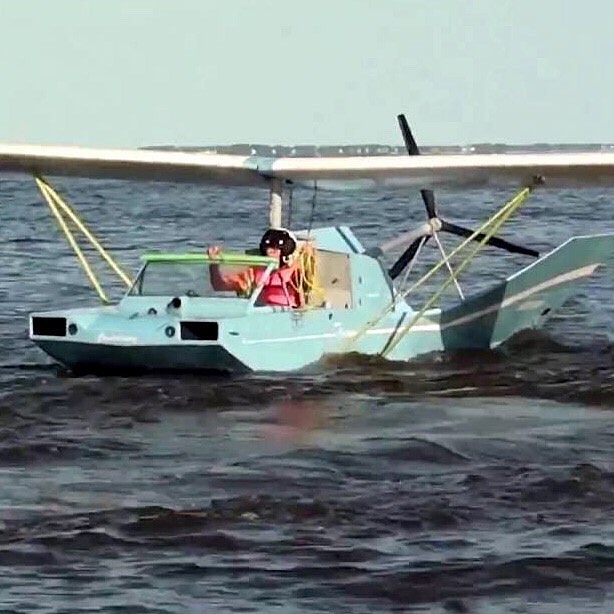
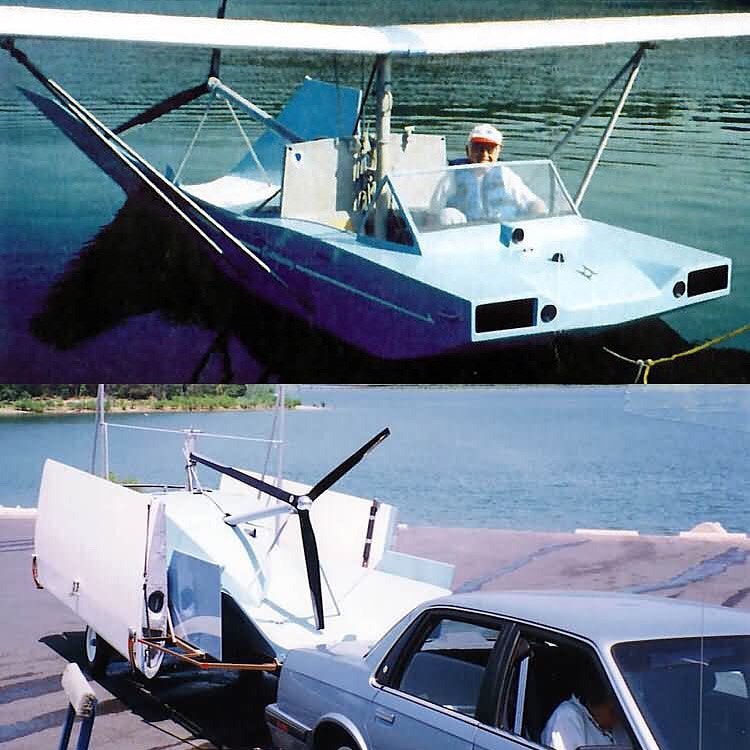
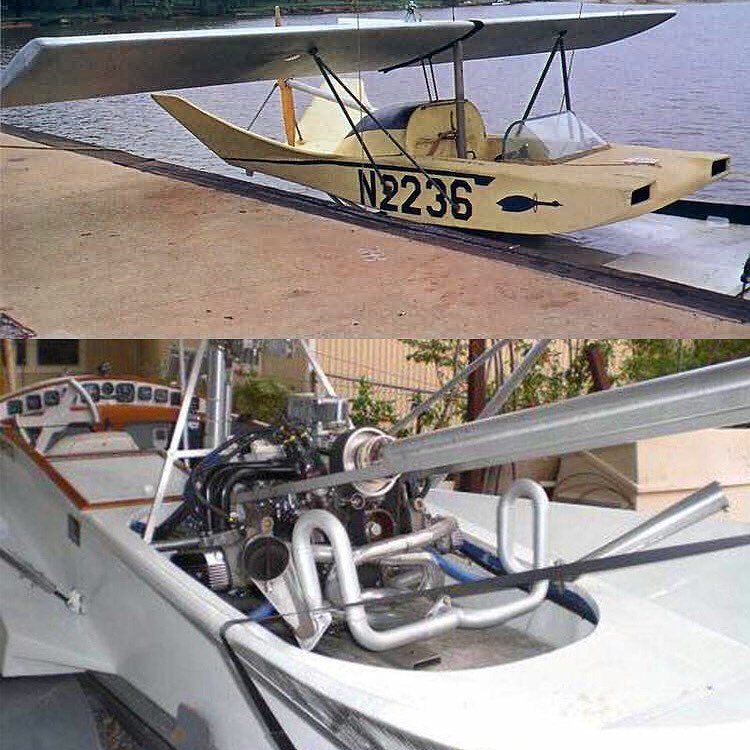
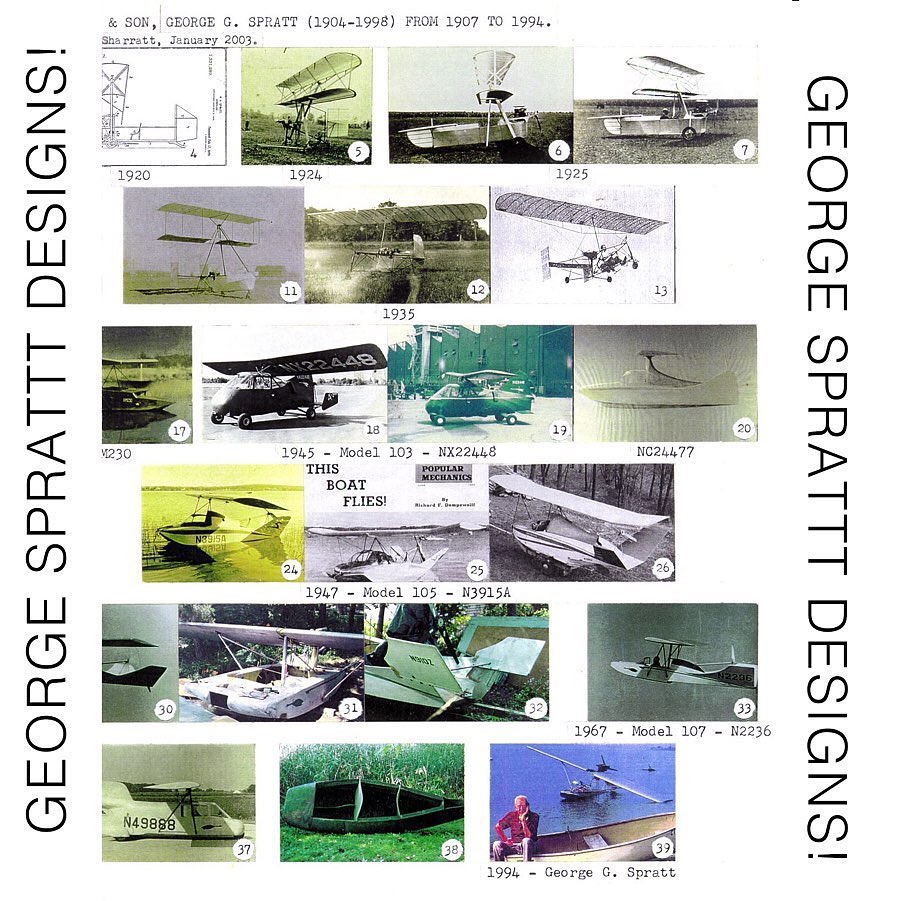

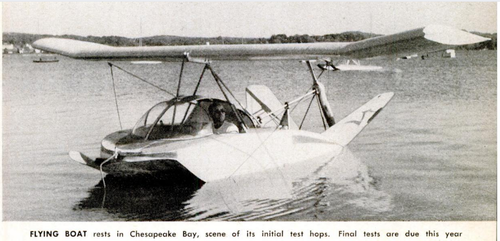
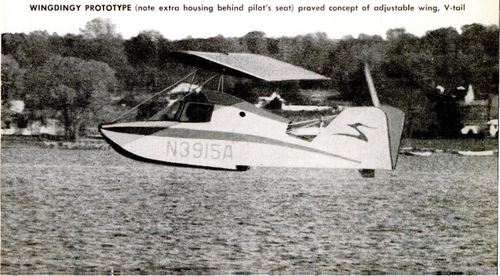
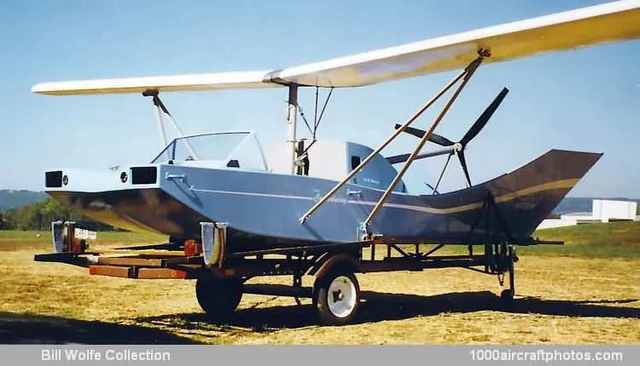
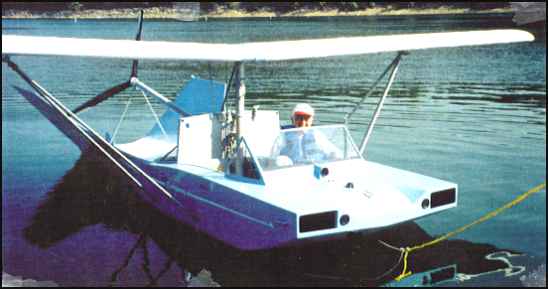


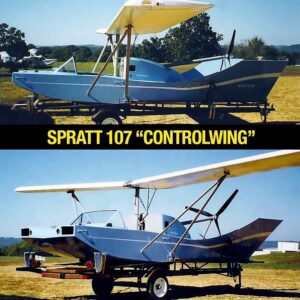
This is not simply a “weird plane”; it is perhaps the most misunderstood and revolutionary design for aviation safety of the 20th century. Based on George G. Spratt’s 1973 plans, the N107GW model is a flying boat that defies everything you were taught in flight school.
Its philosophy is not “how to fly better,” but “how not to kill yourself flying.” It is a machine designed to remove human error from the equation.
Here are its features, based on the technical information of this specific model and its unique lineage.
1. The “Controlwing” Concept: Absolute Safety
What makes this plane unique is that it has no ailerons, no elevators, and no rudder in the traditional sense.
-
The Living Wing: Instead of moving small surfaces on the wing’s edge, the entire wing moves. The wing pivots to control pitch (up/down) and bank (turn).
-
Stall-Proof: This is its legendary advantage. The wing design is made in such a way that, aerodynamically, it cannot stall. If you try to force it, the wing simply adjusts itself and keeps flying. It is the most docile aircraft ever invented.
-
Ideal for Novices, Boring for Experts: Of the more than 100 pilots who tested the prototypes, students loved it for its simplicity. Expert pilots hated it because “there was nothing to do.” You can’t do aerobatics, you can’t spin it; you can only fly safely.
2. N107GW Construction: Wood and Marine Mechanics
The specific N107GW moves away from expensive composites to embrace accessible materials and ingenious mechanical solutions.
-
Wood Construction: Unlike the original prototype (N910Z) which was made of composite materials and weighed about 500 lbs, the N107GW was built entirely of wood. This added about 250 lbs to the weight, but it proved that it can be built with home woodworking tools without the need for complex molds.
-
Boat Heart (Original): This plane used a Mercury Marine 85 HP outboard powerhead, modified according to Spratt’s instructions. Power was delivered to the propeller via a V-belt system.
-
The Current Advantage (Modern Engine): This is where the design comes to life today. Nowadays, you could replace that complex outboard adaptation (which had belt tension and carburetion issues) with a much simpler and more economical modern engine. A 4-stroke industrial V-Twin (Vanguard type) or a light automotive conversion (Honda or Suzuki type) would eliminate all the original mechanical complexity, be cheaper to operate, more reliable, and drastically reduce build and tuning time.
3. Amphibious Operation and Lifestyle
This plane was designed to live on the water, not at an airport.
-
The Speedboat Hull: The fuselage is basically a fast boat. Before taking off, the N107GW behaves like a speedboat, capable of reaching speeds of up to 75 mph (120 km/h) on the water. In fact, the buyer of this specific plane ended up using it just as a speedboat due to its great hydrodynamic performance.
-
Total Independence: George Spratt operated his prototypes from a “personal aircraft carrier” (a 55-foot steel boat) in the middle of the Chesapeake Bay. The design invites that kind of adventure: anchor at a beach, sleep in the plane, and take off from the water.
4. Statistics and Development Realities
The N107GW is a testament to experimental perseverance, with numbers reflecting its nature as a wooden prototype.
-
Takeoff: Despite being heavier than the original prototype due to the wood construction, the N107GW managed to get airborne at about 50 mph (80 km/h).
-
Power: 85 HP (Original Mercury Marine engine).
-
Weight: Approximately 750 lbs (340 kg) empty (estimated, being 250 lbs heavier than the original 500 lbs).
-
Tuning Complexity: Although flying is easy, tuning it is not. The builder of the N107GW spent years adjusting belt tension and wing balance.
Considerations (The rarity of the design)
You have to understand that this is an experimental machine in the purest sense:
-
Lack of Information: It is not a kit with a step-by-step instruction manual. Wing balancing and pitch control sensitivity are learned through experience.
-
Institutional Rejection: It is a concept so different that authorities (FAA, airports) often don’t know what to do with it. It is a misunderstood piece of history.
-
Flight Behavior: having no conventional tail, the response in the air is different from everything else. You don’t “fight” the air, you “accommodate” to it.
In summary, the Spratt Controlwing N107GW is for the builder who values absolute safety and technical innovation. It is a flying boat that promises it will never let you fall from the sky and that, by applying modern engines, could become the most economical and safe amphibious project possible today.
Reviews
There are no reviews yet.