
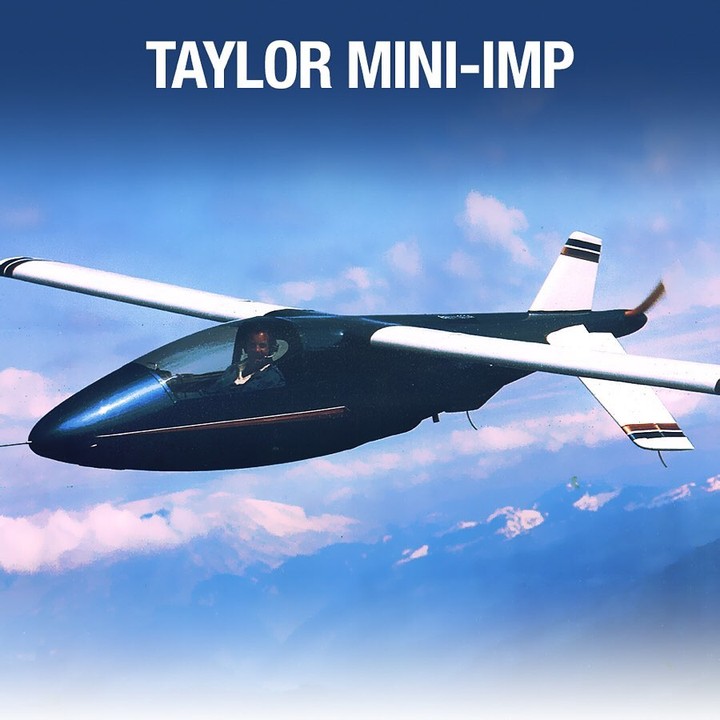
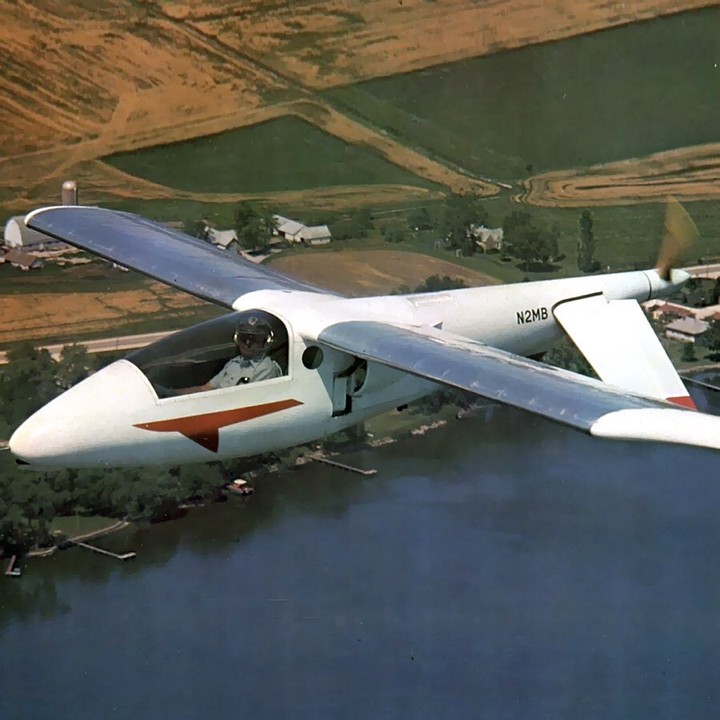
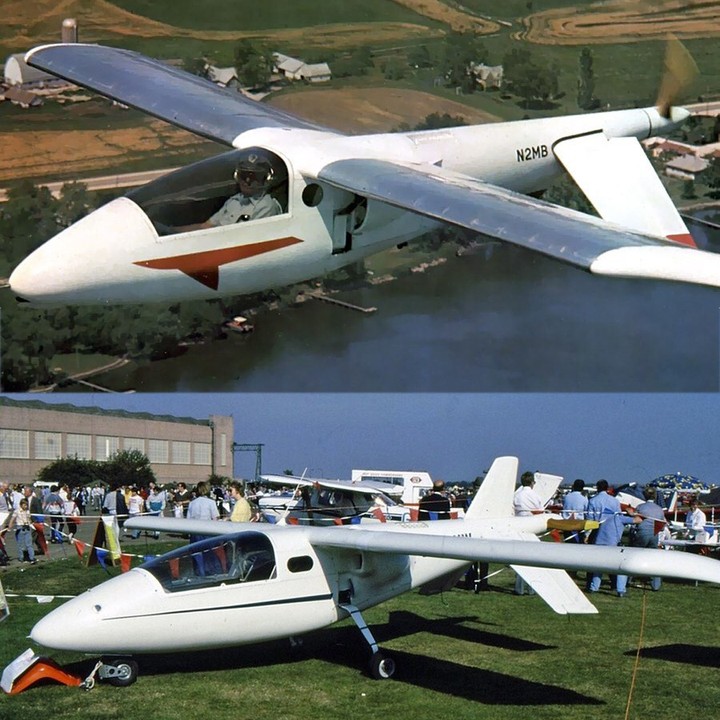
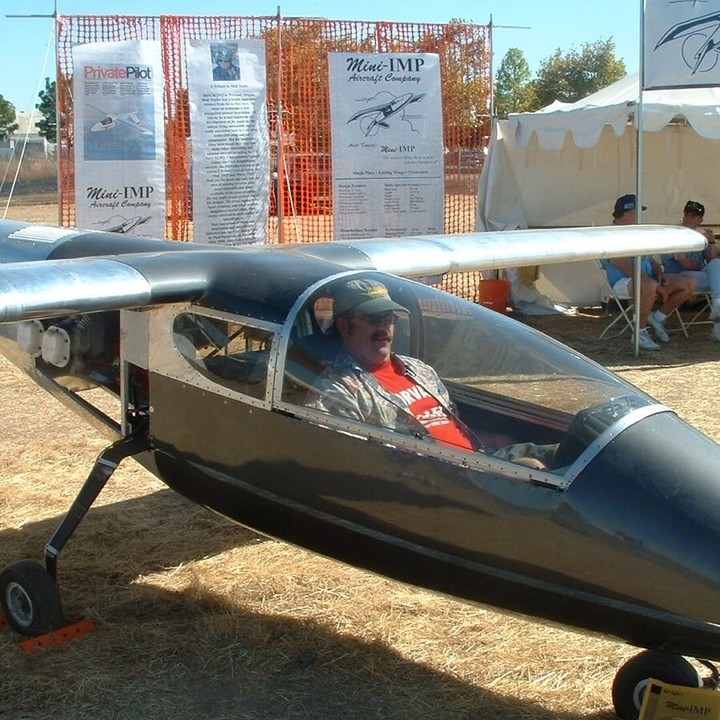
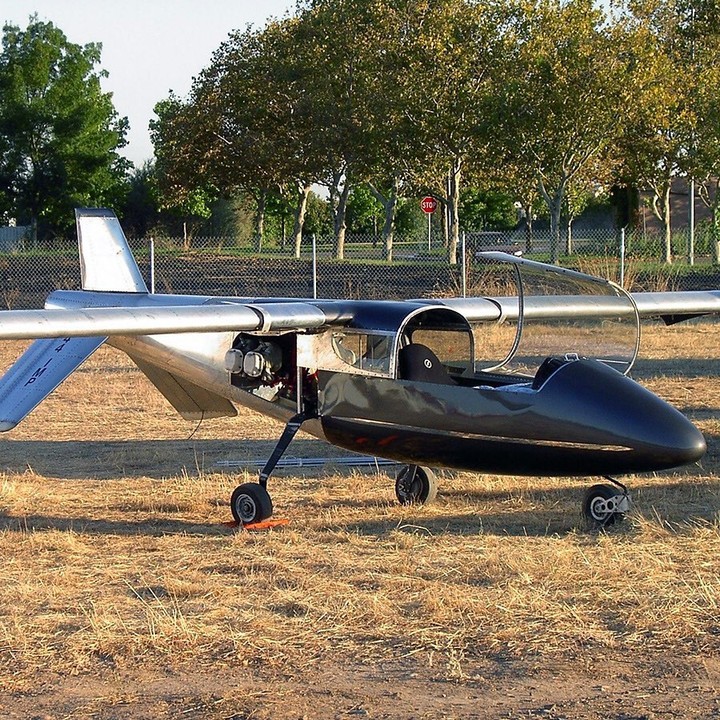
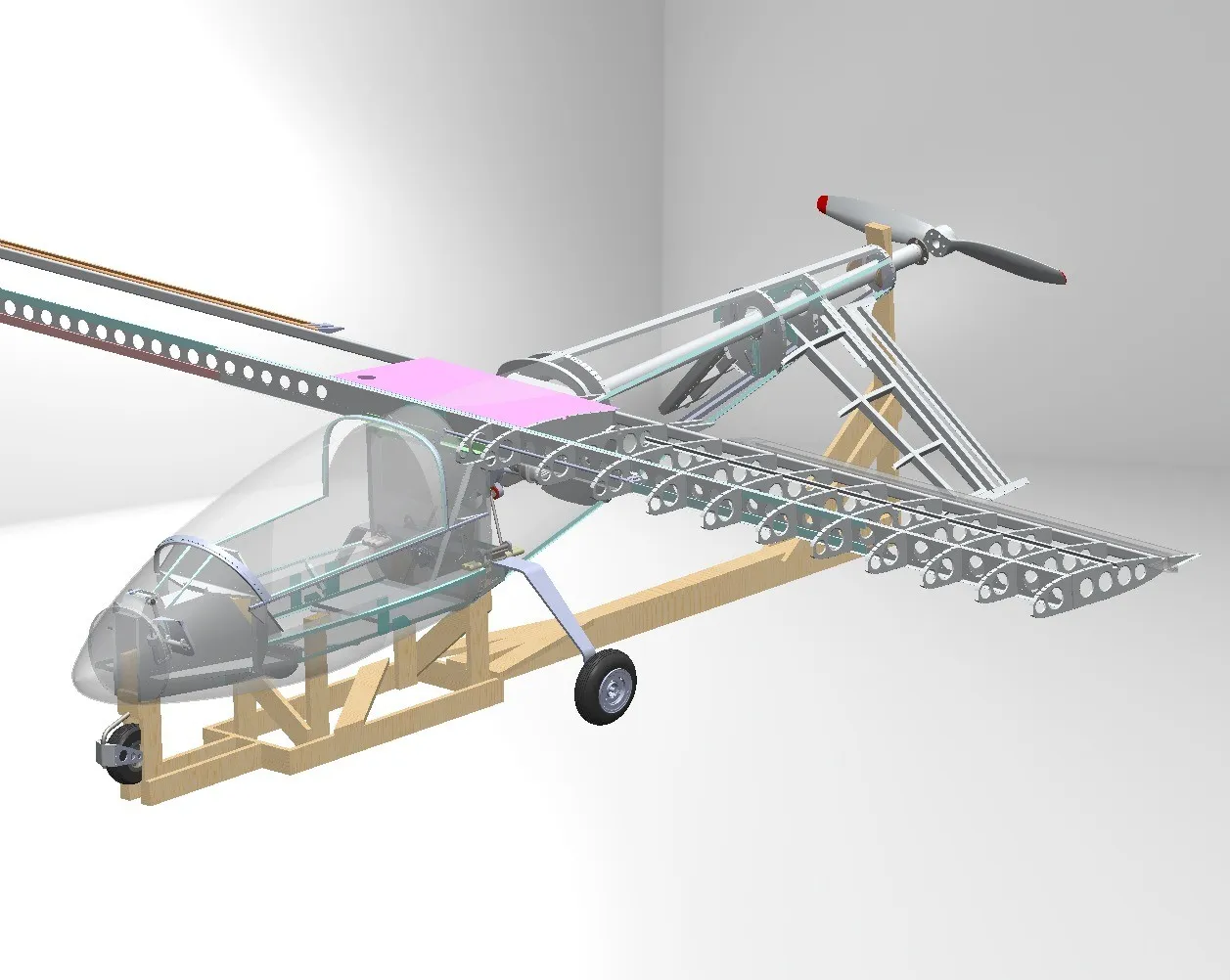
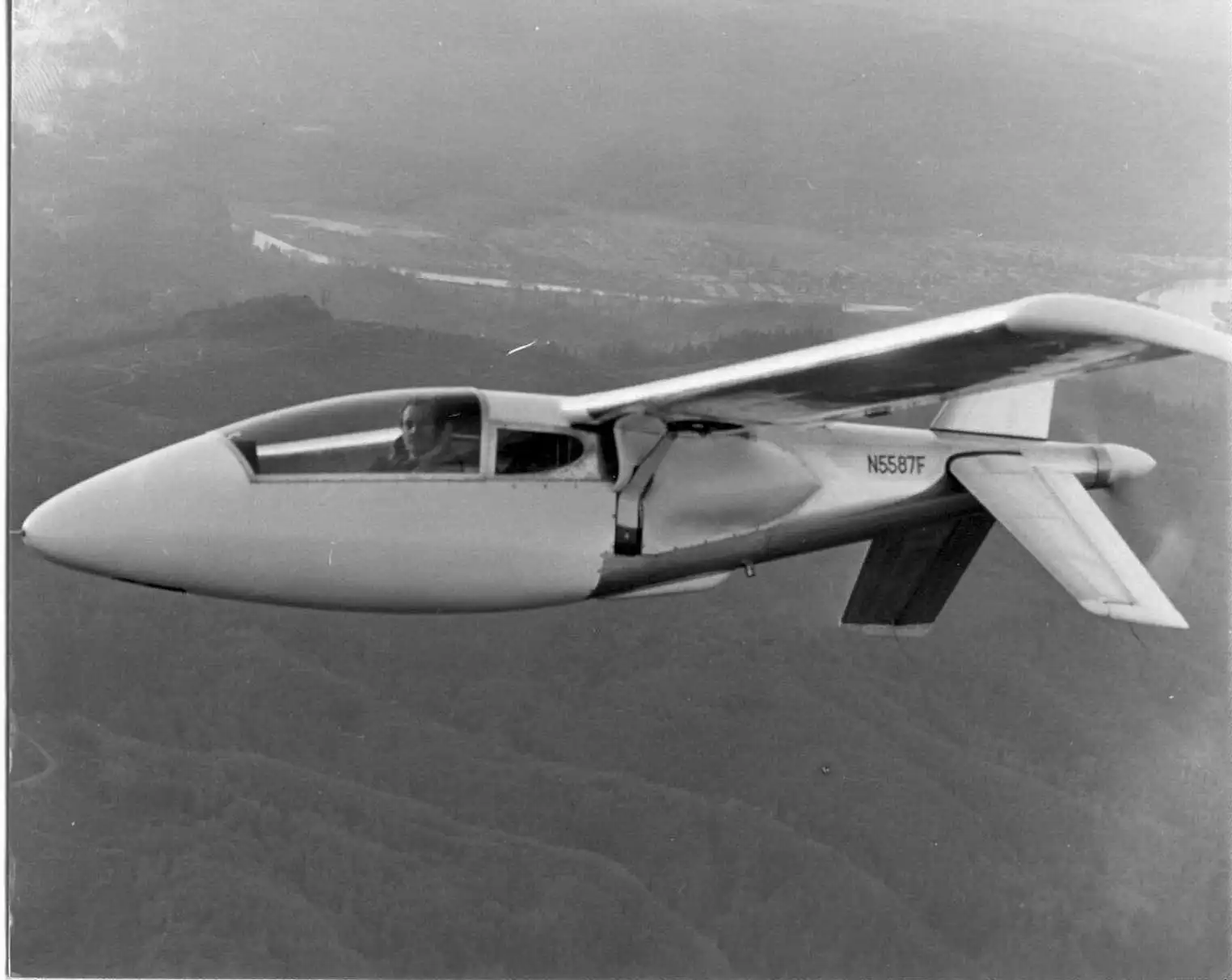
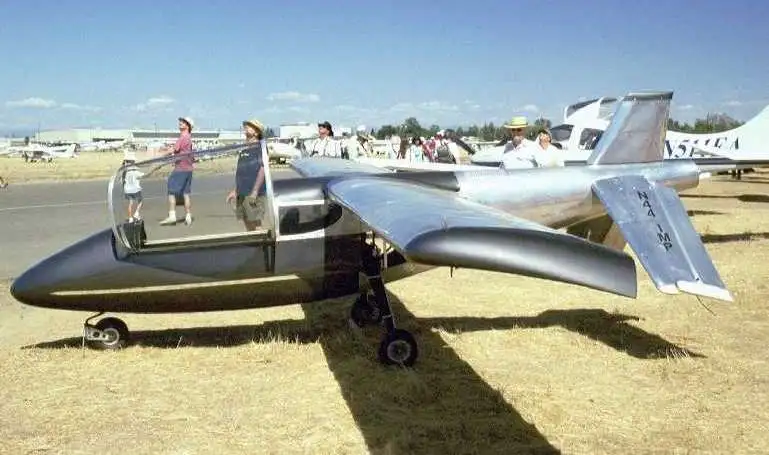
The Mini-IMP is the masterpiece of Molt Taylor, the same genius who designed the famous Aerocar (the flying car). Unlike tube-and-fabric aircraft, the Mini-IMP looks like a miniature military fighter or a high-tech glider.
Its philosophy is not flying with the minimum, but flying fast and far with low power. It is a plane for the builder who wants to feel like a fighter pilot on a garage budget.
Here are its advantages, focused on its radical design and impressive numbers.
1. Radical Aerodynamic Design
The Mini-IMP is unmistakable. Its shape is so clean it looks sculpted by the wind.
-
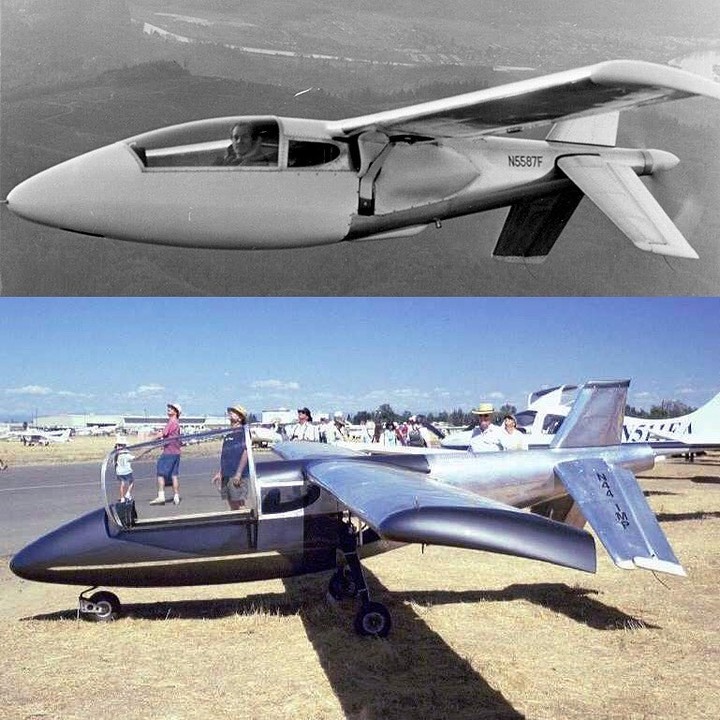
Pusher Configuration (Pusher Prop): The propeller is in the tail, behind everything. This means the air passing over the wings and fuselage is clean (laminar flow), without being battered by dirty air from the propeller. This drastically reduces drag and improves wing efficiency.
-
Inverted V-Tail: It does not have a conventional tail. It uses a downward “V” tail. This not only looks incredibly space-age, but it also protects the rear propeller from striking the ground during takeoffs and landings, and reduces the number of drag-generating surfaces.
-
Retractable Landing Gear: Yes, this small homebuilt plane has retractable gear. Once you take off, the wheels disappear inside the fuselage, turning the plane into a perfect arrow.
2. Mechanical Ingenuity: The Long Shaft
The magic (and the complexity) of the Mini-IMP lies in how it drives that rear propeller.
-
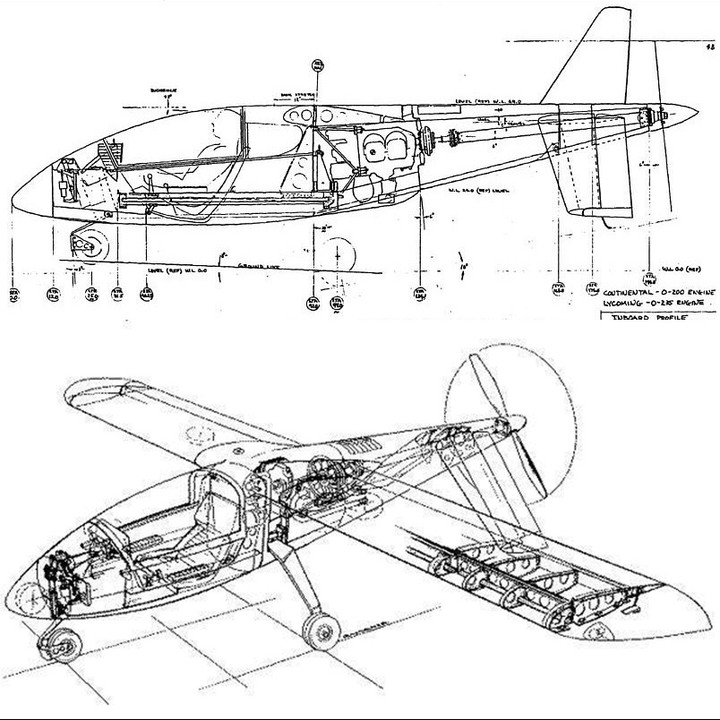
Mid-Engine: The engine is not in the nose, nor in the tail. It is located near the center of gravity of the plane (behind the pilot). This makes the plane perfectly balanced.
-
The Drive Shaft: To connect the central engine to the propeller in the tail, Taylor designed a long shaft system (similar to a rear-wheel-drive car, but lightweight). This allows the nose of the plane to be thin and aerodynamic, offering pilot visibility comparable to that of a helicopter or a fighter jet.
-
Aluminum Construction: Unlike wood or fabric planes, the Mini-IMP is built primarily from riveted sheet aluminum (like commercial or military aircraft). It is a lightweight, durable, and weather-resistant monocoque structure.
3. Statistics and Basic Numbers
This is where the Mini-IMP proves it plays in a different league. For a homebuilt plane with a modified car engine, these figures are outstanding.
Dimensions and Weights:
-
Wingspan: 7.77 meters (25.5 feet).
-
Length: 4.8 meters (16 feet).
-
Empty Weight: Approximately 260 kg (570 lbs).
-
Maximum Takeoff Weight (MTOW): 454 kg (1,000 lbs).
-
Useful Load: Allows for pilots and luggage up to 190 kg (420 lbs), which is excellent for a single-seater.
Performance (with standard 60-80 HP engine):
-
Maximum Speed (Vne): 320+ km/h (200+ mph). The structural limit is extremely high.
-
Cruise Speed: Comfortably maintains 240-257 km/h (150-160 mph).
-
Stall Speed: 80 km/h (50 mph). This is high compared to an ultralight, but normal for a fast plane.
-
Rate of Climb: Climbs at 365 meters per minute (1,200 feet/min). It climbs with authority.
-
Range: With full tanks, it can cover more than 800 km (500 miles) without refueling.
-
Load Factor (G Limits): Designed to withstand +9G and -9G. It is structurally a tank; stronger than almost any human body piloting it.
4. The Pilot Experience
-
The Cockpit: You sit in a reclined position, almost lying down (Formula 1 or glider style). The control stick is on the side (side-stick), which is very ergonomic and frees up space on the panel.
-
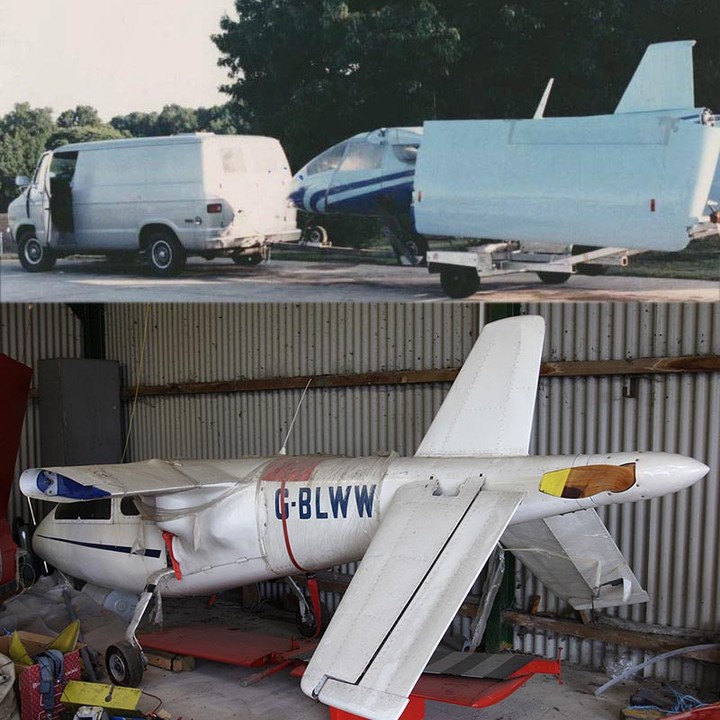
Detachable Wings: A stroke of genius by Taylor was designing the wings to be easily detachable. The plane can be towed by road on its own landing gear or stored in a very small space.
Considerations (The technical complexity)
This is not a weekend project for absolute beginners:
-
The Shaft System: The long shaft requires perfect alignment and a vibration damping system (originally used the Flexidyne coupling). If not built well, it can have torsional vibration issues. It is the most critical part of the plane.
-
Construction Complexity: Working with sheet aluminum, pop rivets, and retractable systems requires more mechanical skill and tools than gluing wood.
-
Runway: Due to its small wings and high speed, it needs more runway to take off and land than the slow planes mentioned before. You will need about 350 to 450 meters (1,150 to 1,500 feet) of decent runway to operate safely; forget about taking off in 20 meters.
In summary, the Aerocar Mini-IMP is for the builder who dreams of having their own personal fighter jet. It is fast, sexy, technically fascinating, and offers performance that puts to shame commercial aircraft costing ten times as much. It is the victory of aerodynamics over brute force.


Reviews
There are no reviews yet.